Thiksey Monastery
Thiksey Monastery
Perched on a rocky spur 19 km from Leh, Thiksey Monastery is one of the largest Tibetan Buddhist complexes in Ladakh. Twelve tiers of temples, a colossal Maitreya statue, and daily dawn pujas make it a major waypoint in the Indus Valley.
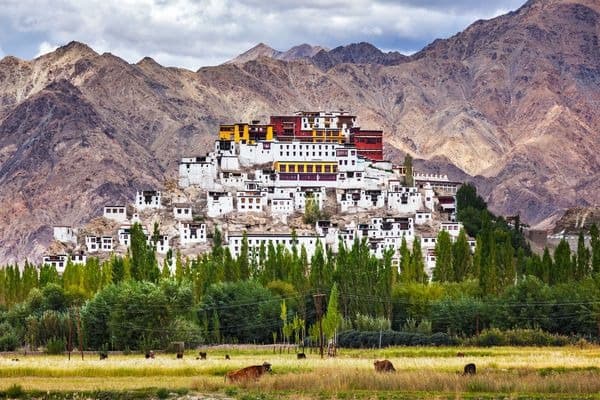
Perched on a rocky spur some 19 km east of Leh, Thiksey Monastery (Thikse Gompa) stands as one of Ladakh's largest Tibetan Buddhist complexes. Its twelve tiers of white and ochre buildings cascade down the hillside like a miniature replica of the Potala in Lhasa. Founded in the 15th century, it shelters an active community of Gelugpa monks and houses one of the region's most imposing statues of Maitreya.
Essential Information at a Glance
- Admission : paid entry (monastery entrance fee)
- Recommended duration : 1.5 to 2 hours to explore all temples
- Dress code : shoulders and knees covered; remove shoes inside temples
- Access : Leh–Manali national highway; taxi or local bus from Leh
- Morning puja : daily ceremony at dawn — arrive before sunrise to attend
What You'll See
The complex comprises a dozen temples, prayer halls adorned with thangkas, murals, and gilded statues. The centerpiece is the Maitreya statue (the Buddha of the future), two stories tall, erected in 1970 to commemorate the Dalai Lama's visit. The upper terrace commands sweeping views across the Indus Valley and the snow-capped peaks of Zanskar.
History and Context
Thiksey was founded in the 15th century by disciples of Tsongkhapa, founder of the Gelugpa school (the lineage of the Dalai Lama). The monastery grew progressively to become the principal seat of the Gelugpa order in central Ladakh. Today it houses around a hundred monks and remains a living center of Buddhist learning.
Highlights of Your Visit
The Maitreya Statue
Standing two stories high and visible from the road, this gilded statue depicts Buddha seated in lotus position. It occupies a dedicated temple and can be admired from two levels of interior gallery.
The Morning Puja
Each dawn, monks gather for the ritual ceremony: chanting, cymbals, and long dungchen horns. Respectful visitors may attend by remaining discreetly to the sides.
The Panoramic Terrace
From the monastery's summit, the view encompasses the Indus Valley, the villages of Shey and Stakna, and the Zanskar and Himalayan ranges. It ranks among Ladakh's most photographed vantage points.
Temples and Frescoes
Several halls preserve ancient frescoes depicting tantric deities, mandalas, and scenes from Buddha's life. The main temple houses a large statue of Shakyamuni surrounded by bodhisattvas.
Etiquette and Visiting Rules
- Remove your shoes before entering each temple.
- Dress modestly: shoulders and knees covered.
- Circumambulate stupas and prayer wheels clockwise.
- During the puja, remain silent and do not cross the monks' space.
- Ask permission before photographing monks or ceremonies.
Photography Tips
Golden sunrise light illuminates the monastery's white façade from the road below — arrive early. For the terrace, morning light is ideal before valley mist sets in. Photography inside temples is often permitted for a small fee; check with the monks on-site.
Location and Access
Thiksey lies approximately 19 km east of Leh, along the national highway toward Hemis and Manali. Shared taxis and local buses connect Leh to Thiksey regularly. The monastery is visible from the main road; a paved path leads up to the entrance. Wheelchair access is limited due to numerous stairs.
Nearby Attractions
- Hemis Monastery — Ladakh's largest and wealthiest, some 20 km east, renowned for its annual festival.
- Shey Palace and Monastery — former royal residence with a large gilded copper Buddha statue, a few kilometers west.
- Stakna Monastery — small gompa perched on a heart-shaped rock, facing Thiksey across the Indus.
- Leh — Ladakh's capital, the logistics hub with bazaars, restaurants, and travel agencies.
Frequently asked questions
May through September brings clear roads and pleasant weather. July–August sees peak season; June and September offer fewer crowds. In winter, the monastery remains accessible but temperatures are extreme and some services are reduced.
Yes. The puja takes place daily at dawn. Arrive before sunrise, remain silent, and position yourself to the sides without disrupting the monks.
Yes. A classic itinerary from Leh groups Shey, Thiksey, Stakna, and Hemis in one day by taxi. Allow a full day to avoid rushing.
In most temples, photography is permitted for a small fee paid at each temple's entrance. During ceremonies, always ask the monks' permission before using your camera.
Access is difficult: numerous stairs connect the different levels. The lower courtyard is accessible, but upper temples and the panoramic terrace require climbing steps.
Yes. Covered shoulders and knees are required. Remove your shoes before each temple. Keeping a spare shawl or sarong in your bag is useful if you've forgotten.
Photos
Want to discover this destination?
Our local advisors design your tailor-made trip.