Pangong Tso Lake
Pangong Tso Lake
At 4,350 meters altitude in Ladakh, Pangong Tso stretches its turquoise and cobalt waters across 134 km between India and China. A mineral and silent landscape, accessible from May to September from Leh.
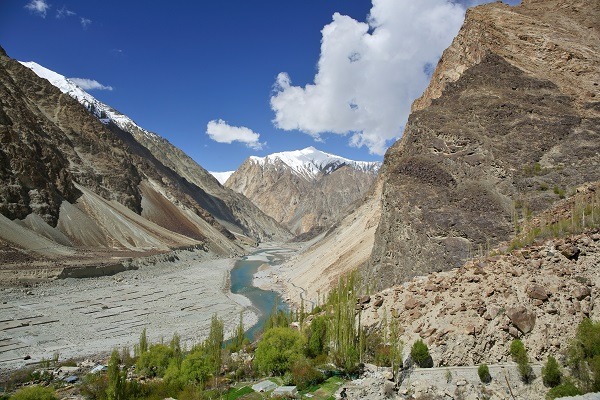
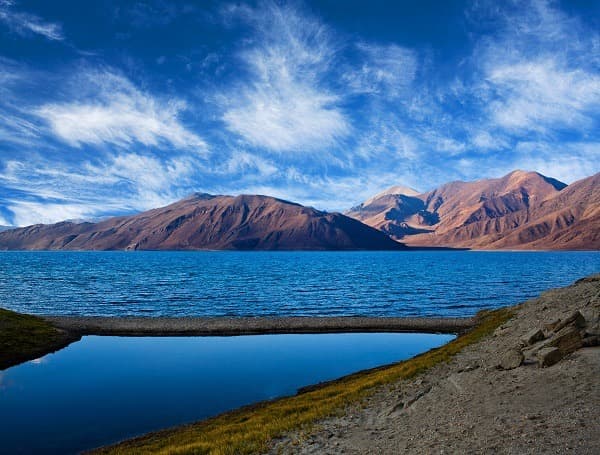
Pangong Tso stretches for roughly 134 km between India and China at over 4,350 meters altitude in Ladakh. Only about one-third of the lake lies on the Indian side. What strikes you immediately: the water shifts color throughout the day, moving from turquoise to cobalt blue depending on the light. The lake is surrounded by barren mountains in ochre and violet tones, entirely devoid of vegetation, enveloped in an almost complete silence.
Quick practical overview
- Altitude: approximately 4,350 m — acclimatization essential before visiting.
- Mandatory permit: Inner Line Permit (ILP) required for Indian nationals; special permit for foreigners, issued in Leh.
- Access: road from Leh via Chang La Pass (approximately 5 hours each way).
- Recommended period: May to September; the lake is inaccessible in winter (roads closed by snow).
- Accommodation on-site: camps and fixed tents permitted on the south shore (Spangmik area).
- Swimming: prohibited — the lake is a sensitive military zone.
- Drones: forbidden — border zone under military surveillance.
What to see
The north shore is accessible up to the village of Spangmik; beyond that, the area is military-restricted. The south shore, open to visitors since 2021, offers different vistas of the lake and mountains. The waters are saline and freeze only in winter, forming a translucent surface. Bar-headed geese and Brahmin ducks frequent the shores in spring and summer.
History and context
The name "Pangong" comes from Tibetan and means roughly "lake of enchanted waters." The lake is divided between India and China along an effective line of control (LAC) that has never been officially demarcated. This zone has witnessed repeated military tensions, notably in 2020. Ladakh, formerly a Buddhist kingdom, became a union territory of India in 2019.
Highlights of the visit
Sunrise over the north shore
From Spangmik, the first light illuminates the snow-capped mountains reflected in the water. The raking light reveals the lake's blue and green nuances. Spending the night in an on-site camp is the only way to witness this moment.
The south shore (Lukung and Man)
Open to visitors since 2021, the south shore offers an opposite vantage point on the lake. The villages of Man and Merak are inhabited by Changpa nomadic communities. The landscape is wilder, less visited than the north shore.
Chang La Pass
On the road from Leh, Chang La Pass peaks at approximately 5,360 m. It's one of the world's highest motor roads. The ascent is gradual but the altitude is felt; pack warm clothing even in summer.
Photography tips
- Best light: early morning (sunrise) and late afternoon for reflections and saturated colors.
- Classic angle: from the north shore, with mountains as backdrop and colored stones in the foreground.
- Drones: strictly forbidden — risk of equipment confiscation and fines.
- Midday light: avoid it, the sky turns white and the lake's colors lose depth.
Location and access
Pangong Tso is located approximately 160 km east of Leh, Ladakh's capital. The road crosses Chang La Pass. The journey takes about 5 hours each way depending on road conditions. There is no regular public transport; most visitors rent a vehicle with driver or join an organized tour from Leh. Access is closed in winter.
In the vicinity
- Leh — the essential starting point, Ladakh's main city with its monasteries and bazaar.
- Thiksey Monastery — large Tibetan Buddhist monastery on the road from Leh, not to be missed.
- Hemis Monastery — the largest and richest monastery in Ladakh, about 45 km from Leh.
- Nubra Valley — another major excursion from Leh, accessible via Khardung La Pass, with its sand dunes and Bactrian camels.
Frequently asked questions
From May to September, when roads are open. July and August are the busiest months. In winter, the lake freezes and roads are cut off by snow.
Yes. Foreign nationals must obtain a special permit (Protected Area Permit) issued in Leh, in addition to the Inner Line Permit. Local agencies can handle this quickly.
Yes, camps and fixed tents are permitted on the north shore, notably at Spangmik. Staying overnight allows you to witness sunrise and sunset, the most spectacular moments.
Yes. The lake sits above 4,350 m altitude. It's strongly advised to spend at least two nights in Leh (3,500 m) before visiting, and avoid intense physical exertion the first few days.
No. Swimming is forbidden — the lake is a sensitive military zone on the India-China border. Drones are also prohibited.
Most tours combine Pangong Tso with Nubra Valley (via Khardung La) and the monasteries around Leh over 7 to 10 days. An organized tour from Leh is the most convenient option.
Photos
Want to discover this destination?
Our local advisors design your tailor-made trip.