Everest Base Camp North Side (Tibet) — or, if India: Stok Kangri Base Camp / Leh
Everest Base Camp North Side (Tibet) — or, if India: Stok Kangri Base Camp / Leh
At 5,250 metres altitude in Ladakh, Lanyala La Pass offers high-mountain panoramas and immersion in Tibetan Buddhist culture, far from conventional tourist circuits.
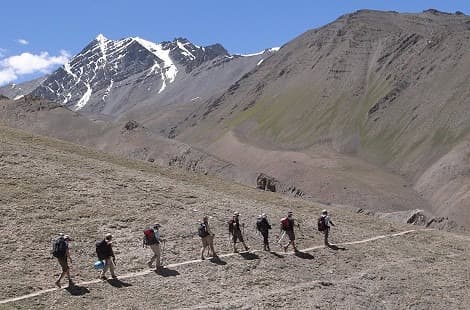
Lanyala La Pass, at 5,250 metres altitude in the Ladakh region, marks one of the high-mountain passages accessible from the Leh valley. At this elevation, the landscape is reduced to essentials: bare rock, intense blue sky, Tibetan prayer flags and silence. The pass serves as a starting point or stage for trekkers venturing into remote zones of inner Ladakh.
Quick practical guide
- Altitude: 5,250 m — prior acclimatization in Leh (3,500 m) essential.
- Access: track and trekking trail from Leh valley; 4×4 vehicle or hiking depending on season.
- Recommended period: June to September (outside Himalayan monsoon).
- Gear: complete mountain equipment, thermal layers, high-altitude sun protection.
- Permit: certain areas of Ladakh require an Inner Line Permit — check before departure.
What you'll see there
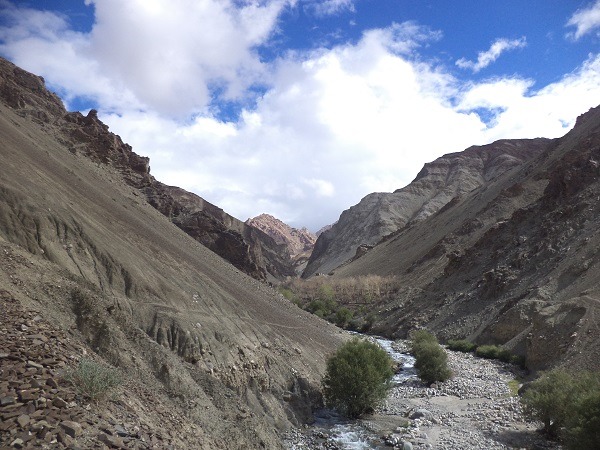
From the pass, the view sweeps across the Ladakh and Zanskar ranges. Prayer flags lungta mark the summit according to Tibetan Buddhist tradition. Vegetation is absent; only a few cairns and trekker traces signal the route. On clear days, snow-capped peaks dominate the 360° horizon.
History and context
High-altitude passes in Ladakh long served as trade routes between India, Tibet and Central Asia. Caravans of pashmina wool and salt used these passages before modern borders closed most cross-border routes. Today, these passes remain axes for trekking and Buddhist pilgrimage.
Highlights of the visit
The high-altitude panorama
At 5,250 m, the atmosphere is rarified and light particularly vivid. Contrasts between ochre rock, snow and sky are striking, especially in the morning before altitude clouds arrive.
Prayer flags
The colourful lungta installed at the pass by residents and trekkers constitute a strong visual marker of Ladakhi Buddhist culture. Each colour corresponds to an element and a specific prayer.
Photography tips
Morning light is most favourable: it rakes across rock and prayer flags. Protect your gear from night cold and frequent pass winds. Batteries drain quickly at this altitude — plan extra chargers.
Location and access
The pass lies in the Ladakh region, State of Jammu and Kashmir (now Union Territory). The city of Leh is the main logistics base. Access is by track from the valley; a local guide is strongly advised for trekkers inexperienced in high altitude.
Around the area
- Leh — capital of Ladakh, essential starting point for acclimatization and logistics.
- Leh Palace — former royal residence overlooking the city, testament to Ladakh kingdom history.
- Thiksey Monastery — one of the largest Buddhist monasteries in Ladakh, a few kilometres from Leh.
- Pangong Lake — high-altitude lake with changing waters, on the Sino-Indian border.
Frequently asked questions
June to September, when roads and trails are clear. Outside this window, snow and frost make access dangerous.
Certain areas of Ladakh require an Inner Line Permit, issued in Leh. Check with local authorities or your agency before departure.
A minimum of two to three days in Leh (3,500 m) is recommended before ascending to 5,250 m. Mountain sickness can strike quickly without acclimatization.
Technically possible for experienced trekkers, but a local guide is strongly advised: weather changes quickly and trails can be poorly marked.
Complete mountain equipment: layered clothing, waterproof jacket, hat, gloves, sturdy trekking boots and high-SPF sun protection.
Want to discover this destination?
Our local advisors design your tailor-made trip.