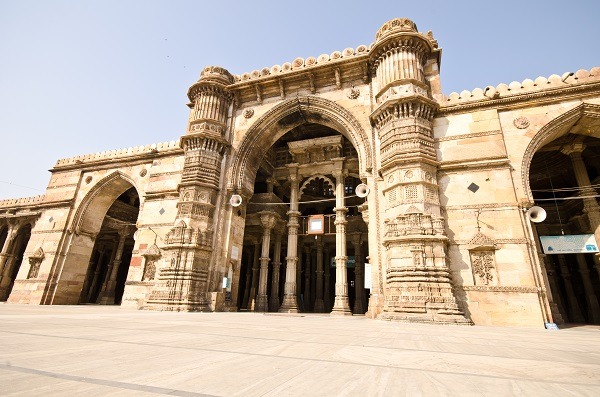
Ujjain
Ujjain
Ujjain is one of the seven sacred cities of Hinduism, nestled on the banks of the Shipra River in Madhya Pradesh. Ancient temples, vibrant ghats, and the Kumbh Mela every twelve years.
Ujjain is one of the seven sacred cities of Hinduism, perched on the banks of the Shipra River in Madhya Pradesh. Once the capital of the Avanti kingdom, it houses the Mahakaleshwar Temple, one of the twelve jyotirlinga shrines of Shiva. Pilgrims, astronomers, and travelers have converged here for millennia. The city hosts the Kumbh Mela every twelve years, attracting tens of millions of devotees.
Quick Practical Information
- Access: well-connected railway station from Indore (approximately 55 km), Bhopal, and Mumbai; nearest airport in Indore.
- Dress code: clothing covering shoulders and knees is mandatory in temples.
- Recommended duration: two to three days to explore the main temples and ghats.
- Best time to visit: October to March (moderate temperatures); avoid May–June (extreme heat).
What to See
Ujjain concentrates an exceptional density of temples, ghats, and astronomical sites. The Mahakaleshwar Temple dominates the cityscape with its imposing shikara. The Shipra River ghats — Ram Ghat foremost among them — come alive at dawn with ritual bathing. The Vedha Shala Observatory (the local Jantar Mantar) bears witness to Ujjain's role as the prime meridian of classical Indian astronomy.
History and Context
Ujjain, formerly Avantika, ranks among the oldest continuously inhabited cities on the subcontinent. It served as the capital of the empire of King Vikramaditya, whose reign is associated with the Vikram Samvat era, still used in the Hindu calendar. The poet Kalidasa is said to have resided here. The city sits on the Tropic of Cancer and served as the zero meridian for Indian astronomy for centuries.
Highlights of Your Visit
Mahakaleshwar Temple
One of the twelve jyotirlinga, this temple is the spiritual heart of Ujjain. The early morning bhasma aarti — a ceremony in which the lingam is anointed with sacred ash — draws hundreds of devotees before dawn. Access to the inner sanctum requires depositing cameras and mobile phones.
Ram Ghat and the Shipra Ghats
Ram Ghat is the primary site for ritual bathing. At dawn, the low-angle light across the river and the silhouettes of pilgrims create a uniquely evocative atmosphere. Evening aarti ceremonies are held on the steps.
Kumbh Mela (Simhastha)
Every twelve years, Ujjain hosts the Kumbh Mela under the name Simhastha. It is one of the largest human gatherings on Earth. Outside this period, the city remains an active pilgrimage destination year-round.
Vedha Shala Observatory
This astronomical observatory, built under Maratha rule in the 18th century, recalls Ujjain's significance as the prime meridian of ancient India. Stone instruments allow measurement of solar time and celestial positions.
Kal Bhairav Temple
Dedicated to the fierce manifestation of Shiva, this temple is renowned for the ritual offering of liquor to the deity — a rare and intriguing practice within Hinduism. It is located in the old quarters of the city.
Etiquette and Visiting Rules
- Remove your shoes before entering any temple.
- Dress modestly: shoulders and knees covered for both men and women.
- Photography is forbidden inside the inner sanctum of Mahakaleshwar; respect signage in each temple.
- Avoid public displays of affection in sacred spaces.
- Some temples may restrict entry to Hindus in the most sacred areas.
Photography Tips
The golden light at dawn over Ram Ghat offers the city's finest photography. Arrive before sunrise to capture pilgrims in the morning mist. The ghats at dusk during aarti produce beautiful reflections of flames on the water. Always check restrictions at each temple entrance.
Location and Access
Ujjain lies in western Madhya Pradesh, approximately 55 km from Indore. Ujjain Junction railway station connects to major Indian cities via numerous trains. From Indore, buses and shared taxis provide regular service. Indore's international airport is the most convenient air gateway.
Within the city, the principal temples are accessible on foot or by rickshaw from the center. The ghats and Mahakaleshwar Temple are close to one another.
Nearby Attractions
- Indore — a thriving commercial and culinary hub of Madhya Pradesh, approximately 55 km away.
- Omkareshwar — a sacred island on the Narmada River housing another jyotirlinga, approximately 130 km away.
- Mandu — a medieval fortress city with Afghan and Mughal ruins, approximately 150 km away.
- Maheshwar — a riverside town on the Narmada known for its maheshwari textiles, approximately 90 km away.
Frequently asked questions
October through March offers pleasant temperatures. Avoid May and June, which are intensely hot. The Kumbh Mela (Simhastha) occurs every twelve years and draws enormous crowds.
Yes, though access is limited and online reservation is typically required. The ceremony takes place very early in the morning, before dawn.
Yes, the two cities are approximately 55 km apart. A day trip to Ujjain from Indore is feasible, though two nights on site allow you to better experience the atmosphere of the ghats at dawn and dusk.
It is forbidden inside the inner sanctum of Mahakaleshwar. In other temples, check the signage at the entrance. On the ghats, photography is generally permitted.
Most temples welcome all visitors. Certain inner areas may be reserved for Hindus. Respect the guidance provided on-site.
Rickshaws (auto and cycle) are the most convenient option. The main sites — Mahakaleshwar, Ram Ghat, and Kal Bhairav — are grouped together and accessible within minutes.
Photos
Want to discover this destination?
Our local advisors design your tailor-made trip.