Roopnath Temple
Roopnath Temple
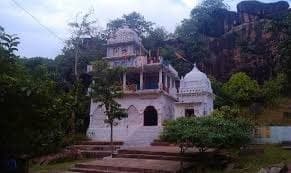
Nestled against a forested cliff near Katni, Roopnath Temple combines a Shaivite sanctuary with a natural spring and Mauryan rock inscriptions among the oldest in Madhya Pradesh.
Roopnath Temple rises in an isolated natural setting, a few kilometres from Katni in central Madhya Pradesh. Carved into the rock and set against a cliff face, this Shaivite site houses a sacred spring and ancient inscriptions that make it a quiet pilgrimage destination, frequented mainly by local devotees. Its forest location, far from mainstream tourist circuits, grants it a rare atmosphere of contemplation.
What to see
The main sanctuary is dedicated to Shiva in the form of a natural lingam fed continuously by a spring that emerges from the cliff face. The surrounding rock bears Brahmi inscriptions dating to the Mauryan era, classified among the region's oldest epigraphic records. A natural basin collects the spring water before it flows away from the site.
History and context
Roopnath is known to historians for its Mauryan inscriptions, attributed to the age of Ashoka (3rd century BCE), which rank among the emperor's minor rock edicts. The site therefore holds dual value: religious for Shaivites, and archaeological for scholars. The Archaeological Survey of India (ASI) lists it as a protected site.
Highlights of a visit
The lingam and natural spring
The water flowing directly onto the lingam from the rock face is considered a perpetual abhisheka bestowed by nature itself. Pilgrims come to leave flowers and milk during Shaivite festivals, particularly Maha Shivaratri.
The Mauryan inscriptions
Carved into the cliff surface, these Brahmi inscriptions constitute a primary historical document. They are visible to the naked eye, though reading them requires knowledge of ancient epigraphy. An ASI panel on-site explains their context.
Etiquette and visiting rules
- Covered clothing required inside the sanctuary; shoulders and legs should be covered.
- Shoes removed before entering the sacred space.
- Quiet and respectful behaviour during prayers.
- Do not touch the rock inscriptions.
Photography tips
Morning light filtering through the trees illuminates the cliff face favourably. Photographing the inscriptions in raking light (early morning or late afternoon) brings out the carvings. Inside the sanctuary, check with the priest whether photography is permitted that day.
Location and access
The temple is situated in the forest zone around Katni, a town well served by rail (an important railway hub in Madhya Pradesh). From Katni railway station, reach the site by road; a hired vehicle or local taxi is the most practical option, as direct public transport is limited. The final access path may be unpaved depending on the season.
Nearby attractions
- Bahuti Falls — one of Madhya Pradesh's highest waterfalls, in a similar forest setting.
- Vijayraghavgarh Fort — ruins of a medieval fort near Katni, seldom visited.
- Kanha National Park — Madhya Pradesh's iconic tiger reserve, accessible from Katni.
Frequently asked questions
The dry season, October to March, offers the best access conditions. During the monsoon (July–September), forest paths can become difficult. Maha Shivaratri draws large numbers of pilgrims and features lively celebrations.
As an active place of worship and an ASI-protected site, entry fees may apply for the archaeological section. Check current rates with the ASI or your local agency before your visit.
Yes. Katni serves as a transit point to Kanha. One day suffices for Roopnath; you can then head to Kanha's entry gates the following day.
Photography of the rock inscriptions is generally tolerated for personal use. Do not touch the rock and respect any notices posted by the ASI on site.
One to two hours are sufficient to explore the sanctuary, examine the inscriptions, and savour the natural surroundings. Add travel time from Katni on top.
Photos
Interested in this visit?
We can include it in your personalised itinerary.