Lodurva Jain Temple
About 15 km from Jaisalmer, the Jain temples of Lodurva occupy the site of the former capital of the Bhati Rajputs. Carved golden sandstone, a remarkable torana, and the living atmosphere of an active pilgrimage site.
Some fifteen kilometers northwest of Jaisalmer, the village of Lodurva is home to a complex of Jain temples rebuilt in the 17th–18th centuries on the site of the former capital of the Bhati Rajputs. The main temple, dedicated to Parshvanatha (the 23rd tirthankara), stands out for its finely carved yellow sandstone façade and a remarkable torana (entrance archway). The site remains active: Jain pilgrims visit regularly, lending it a serene atmosphere far removed from the bustle of Jaisalmer.
Quick practical information
- Entrance: paid admission (modest fee, verify on site)
- Dress code: clothing covering shoulders and knees required; shoes to be removed at entrance
- Recommended duration: 1 to 1.5 hours
- Access: by car or tuk-tuk from Jaisalmer (road toward Khuri/Sam, turn-off to Lodurva)
- Best season: October to March, comfortable temperatures
What you'll see
The complex comprises several golden sandstone sanctuaries. The Parshvanatha temple is the most impressive: its shikhara (tower-sanctuary) rises above a base carved with friezes of elephants, horses, and floral motifs. Inside, a statue of Parshvanatha beneath a canopy of seven-headed cobras serves as the focal point of devotion. A kalpa vriksha (wish-fulfilling tree) stands within the compound; devotees tie colored threads to it.
History and context
Lodurva was the capital of the Bhati Rajputs before Rawal Jaisal founded Jaisalmer in 1156. The ancient city was destroyed during repeated invasions, notably by Mahmud of Ghazni in the 11th century. The present temples are later reconstructions, funded by prosperous Jain merchants who played a central economic role in medieval Rajasthan. The site preserves remnants of ancient urban planning, visible in the immediate surroundings.
Highlights of your visit
The carved torana
The entrance archway of the main temple is considered one of the region's most elaborate examples of sandstone carving. Every column and lintel bears figures of yakshis, celestial musicians, and interwoven geometric motifs.
The Parshvanatha statue
The temple's presiding deity is depicted standing, protected by a seven-headed cobra spread in a canopy. The image is regularly adorned with fresh garlands by priests, giving the visit a living, dynamic quality.
The wish-fulfilling tree
In the inner courtyard, a sacred tree is associated with the kalpa vriksha tradition. Pilgrims make wishes here; the tree is surrounded by small oil lamps lit as offerings.
Sunset over the site
Late in the afternoon, raking light tints the yellow sandstone in deep orange. The site sees few tourists at this hour, allowing for a peaceful visit and photographs without crowds.
Etiquette and visiting rules
- Remove your shoes before entering each sanctuary.
- Dress modestly: shoulders and knees must be covered.
- Avoid bringing non-vegetarian food into the temple compound.
- Silence is expected inside the sanctuaries during ceremonies.
- Ask permission before photographing priests or devotees at prayer.
Photography tips
Early morning and late afternoon light enhance the golden sandstone. The torana photographs well from outside the courtyard, framing the entire arch. Inside the sanctuaries, photography is sometimes restricted or forbidden: check the signs at the entrance. A standard lens (35–50 mm) suffices for carved details.
Location and access
Lodurva lies approximately 15 km northwest of Jaisalmer, on the road leading to the Sam dunes. Most visitors combine a visit here with an excursion to the dunes or Thar Desert. By tuk-tuk or rental car from Jaisalmer, the journey takes about 20–30 minutes. No regular public transport serves the site directly; a private vehicle remains the most practical solution.
In the vicinity
- Jaisalmer Fort — the medieval golden sandstone fortress, about 15 km away, with its own interior Jain temples.
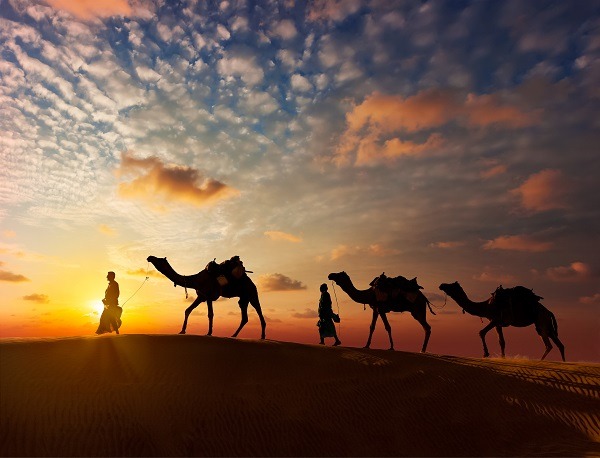
- Sam Dunes — the great dunes of the Thar Desert, accessible on the same route, ideal at sunset.
- Jaisalmer Fort Jain Temples — a complex of seven Jain temples from the 12th to 15th centuries, inside the fort itself.
Frequently asked questions
October to March offers pleasant temperatures. Summer (April–June) is very hot in Rajasthan's desert; visiting is possible but challenging.
Yes. Both sites lie on the same road from Jaisalmer. A day suffices: Lodurva in the morning, Sam Dunes in late afternoon for sunset.
Rules vary by sanctuary. Signs indicate areas where photography is prohibited. Outside and in courtyards, photography is generally permitted.
Yes: shoulders and knees must be covered, shoes removed at each sanctuary entrance. Bring socks if visiting in winter, as the floor can be cold.
A tuk-tuk or private taxi from Jaisalmer is the most common option. Arrange a round-trip with waiting time. No regular bus serves the site directly.
Access to the outer courtyards is relatively flat, but the sanctuaries have steps. Accessibility for people with disabilities remains limited; consult your local travel provider.
Interested in this visit?
We can include it in your personalised itinerary.