Shaukat Mahal
Shaukat Mahal
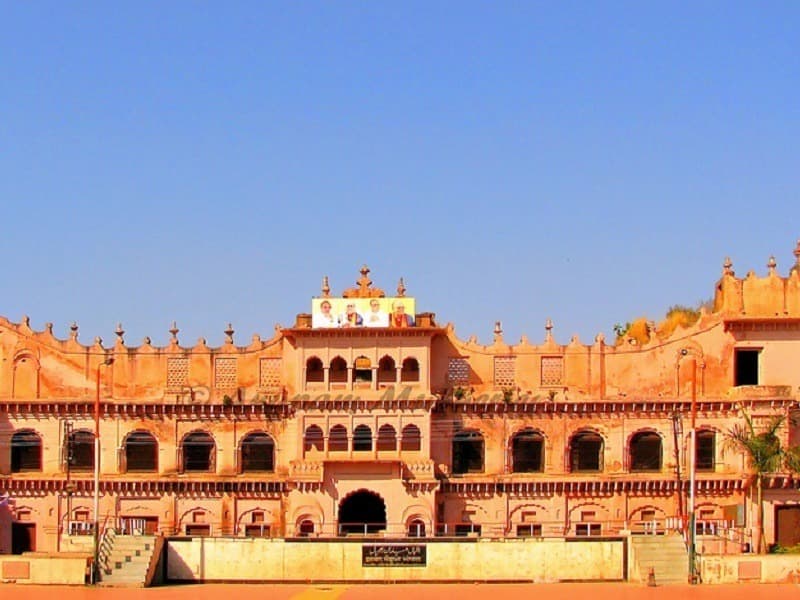
Built in 1830 in the Chowk quarter of Bhopal, Shaukat Mahal merges European and Indian architecture. White alabaster façade and sculptured triangular arches.
Shaukat Mahal is a nineteenth-century building located in the Chowk quarter, at the heart of old Bhopal, in Madhya Pradesh. Its architecture blends Western and Asian elements, a legacy of a commission given to a Frenchman who presented himself as a descendant of the Bourbon dynasty.
Why visit Shaukat Mahal
Three reasons justify a stop at this building:
- A distinctive silhouette in Bhopal's urban landscape, with its white alabaster façades and sculpted triangular arches.
- A rare testimony to Indo-European stylistic fusion in central India, at a time when French architectural influence on the region remained marginal.
- A strategic location in the Chowk bazaar, allowing you to combine the visit with other nearby historic sites.
History
Shaukat Mahal was built in 1830 by order of the Bhopal court. According to local tradition, its designer was a Frenchman who claimed descent from the House of Bourbon—a claim passed down by the community known as the "Bourbons of Bhopal," documented in several colonial accounts but never definitively established.
During the princely period, the building served as a public audience hall for the nawabs of Bhopal, one of the few princely states governed by a line of sovereign women. Today, the building houses municipal offices, which limits internal access.
What to see on site
The white alabaster façade
The exterior, in white alabaster, is the main visual point of interest. The walls feature ornate floral motifs and relief work that breaks with the usual codes of central Indian palaces.
The triangular arches
The building features a series of finely sculpted triangle-shaped arches, particularly visible beneath the eaves and on the porch ceiling. This unusual form, closer to European Gothic than to classical Indo-Islamic arching, is what most distinguishes the edifice.
The Chowk quarter
The palace is embedded in the dense fabric of old Bhopal. The surrounding alleyways host craft shops, zardozi embroidery workshops and local food stalls, and constitute a visit in their own right.
Practical information
Since Shaukat Mahal houses municipal administrative services, visits are generally limited to external observation. No entrance fee is required to admire the façade from the street. Allow 20 to 30 minutes on site, longer if you extend your walk through Chowk.
Late afternoon offers the best light for photography, when the low sun highlights the façade's sculptures. Avoid office hours if you wish to circulate freely around the courtyard.
Nearby
- Sadar Manzil: just steps from Shaukat Mahal, this red-brick building also served as a public audience hall under the nawabs. Its silhouette contrasts with that of its neighbor and logically completes the visit.
- State Museum Bhopal: a state museum housing sculptures, manuscripts and archaeological objects from Madhya Pradesh.
- Upper Lake and Lower Lake: the two bodies of water that structure the city, accessible within minutes from Chowk.
- Taj-ul-Masajid: one of India's largest mosques, approximately 2 km away.
How to get there
By air: Bhopal Airport (Raja Bhoj) is about 15 km from the city center. It is mainly connected to major Indian cities (Delhi, Mumbai, Indore). From the airport, allow 30 to 45 minutes by taxi to reach the Chowk quarter.
By train: Bhopal Junction station is a major terminal on the Delhi–Mumbai rail axis (broad gauge) and serves most major cities in the country. The Chowk quarter can be reached by auto-rickshaw in about fifteen minutes.
By bus: Bhopal is connected by road to Delhi, Jabalpur, Gwalior and Indore. Several private and public companies serve the interstate bus station.
On the spot: auto-rickshaws and taxis are the most convenient means. The Chowk quarter can be explored on foot, though vehicle access is often congested.
Frequently asked questions
Frequently asked questions
Plan your trip
Shaukat Mahal fits naturally into an itinerary dedicated to Madhya Pradesh, between princely heritage and archaeological sites. To build a tailor-made itinerary, explore our trips to India.
Interested in this visit?
We can include it in your personalised itinerary.