Rohtang Pass
Rohtang Pass
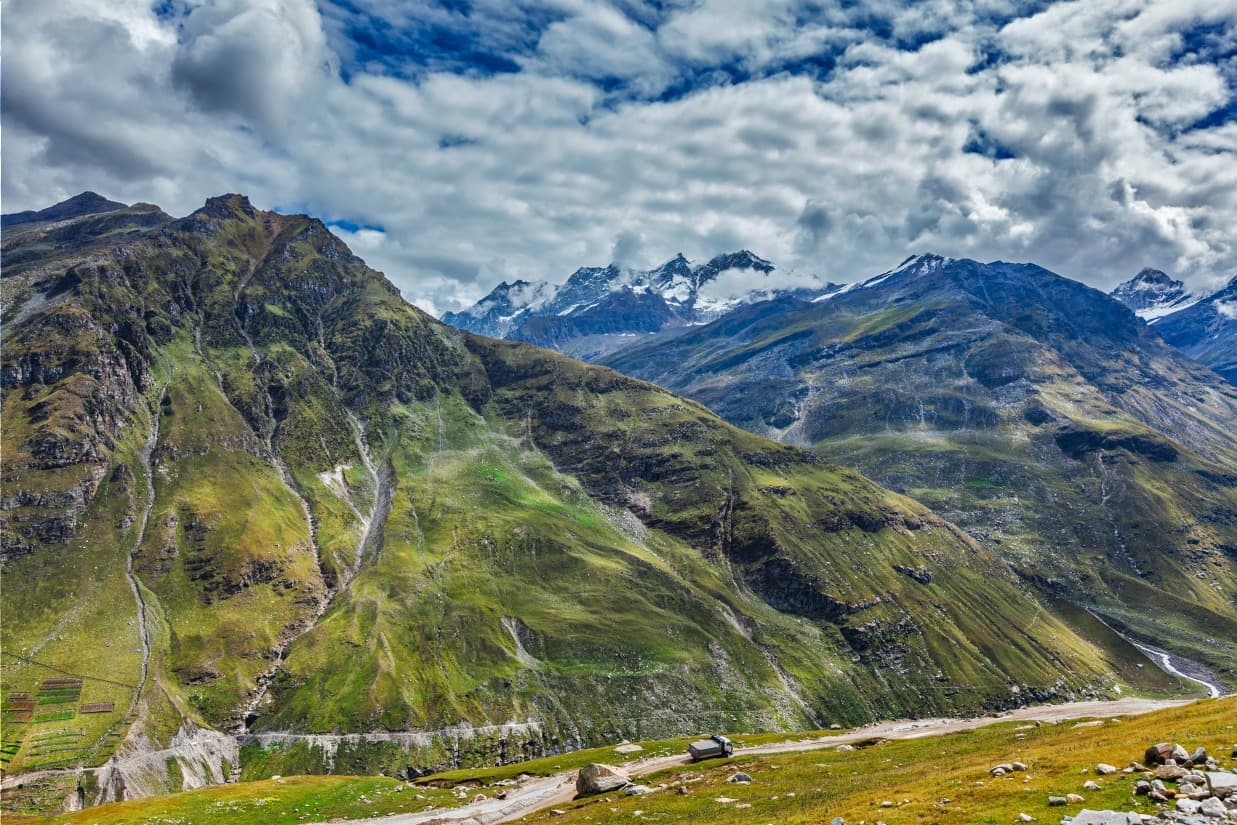
At 3,978 m elevation, Rohtang Pass connects Manali to Lahaul-Spiti with striking contrast between the lush green slope and arid plateau. Mandatory permit, seasonal opening, Himalayan panoramas.
Rohtang Pass rises to approximately 3,978 metres altitude in the Himalayas of Himachal Pradesh, about fifty kilometres north of Manali. It connects the Kullu Valley to the Lahaul-Spiti plateau and marks a sharp climatic boundary: on one side verdant forests, on the other an arid high-altitude landscape. The road, open only part of the year, is also the strategic route towards Leh and Ladakh.
Practical information at a glance
- Elevation: approximately 3,978 m
- Access: road from Manali (NH-3), approximately 51 km; shared jeep or taxi from Old Manali or Mall Road
- Opening period: generally May to November, depending on snowfall; closed in winter
- Mandatory permit: non-local vehicles must obtain a daily permit issued by the SDM (Sub-Divisional Magistrate) of Manali — limited quota per day
- Recommended duration: half day from Manali (early departure recommended)
- What to wear: warm clothing essential even in summer; wind and cold are intense at the summit
- Accessibility for people with reduced mobility: drivable road to the pass, but uneven terrain; no adapted facilities
What you'll see
At the summit, the landscape shifts dramatically. Patches of snow persist much of the year, and glaciers cling to the flanks of surrounding ridges. The view encompasses the snow-capped peaks of Kullu Pumori and the Pir Panjal ranges. Below on the Lahaul side, the Chandra Valley stretches out, dry and mineral, in total contrast to the vegetation around Manali.
History and context
The name "Rohtang" literally means "pile of corpses" in the local language — a reminder of the travellers and merchants who perished attempting to cross in bad weather. For centuries, this pass was the only overland route connecting Lahaul-Spiti to the rest of Himachal Pradesh. Today, the Rohtang Tunnel (Atal Tunnel), inaugurated in 2020, allows year-round passage around the pass, but crossing via the pass remains a sought-after experience.
Highlights of the visit
The climb from Manali
The road winds through forests of pine and birch before crossing the tree line. The hairpin bends offer progressive views over the Beas Valley. The first patches of snow appear well before the summit, around 3,000 m.
The summit viewpoint
At the pass, a 360° panorama unfolds across the Himalayan ranges. On clear days, peaks exceeding 6,000 m are visible. Tibetan prayer flags mark the passage; vendors offer warm clothing and hot beverages.
The descent into Lahaul
On the northern side, the landscape becomes immediately desert-like. The road descends to Gramphu, the junction point towards Spiti or Keylong. This stark contrast between the two slopes is one of the most striking experiences at the pass.
Photography tips
Start early in the morning: the light is better and clouds haven't yet engulfed the peaks. In the afternoon, the pass frequently gets shrouded in fog. Photograph the contrast between white snow patches and the intense blue sky at high altitude. On the Lahaul side, the ochre and grey tones of the valley offer a very different frame from Kullu's green vegetation.
Location and access
Rohtang Pass is located approximately 51 km north of Manali via NH-3. The road passes through Palchan and Marhi. Shared jeeps depart early morning from Old Manali. A daily permit is mandatory for non-local vehicles; it can be obtained online or from the SDM office in Manali. The quota is limited: reserve the day before. The Atal Tunnel, inaugurated in 2020, now allows access to Lahaul without crossing the pass.
Nearby attractions
- Manali — essential starting point, with Old Manali, Hadimba Temple and Mall Road.
- Solang Valley — midway between Manali and Rohtang, winter sports and paragliding site.
- Keylong — capital of Lahaul-Spiti, first stop after the pass on the route to Leh.
- Spiti Valley — accessible from Gramphu after the pass, high-altitude landscape and Buddhist monasteries.
Frequently asked questions
The pass is generally accessible from May to November, depending on that year's snowfall. It closes with the first significant snowfall, sometimes as early as October. Check road conditions with local authorities before departing.
Yes. Non-local vehicles must obtain a daily permit issued by the SDM of Manali. The number of vehicles authorised per day is limited. It's advisable to arrange this the day before, either online or in person.
Even in the height of summer, the pass is cold and windy. Bring a warm jacket, windbreaker and closed-toe shoes. Warm clothing rental shops are available along the road, but quality varies.
Yes. The pass is the gateway to Lahaul-Spiti. From Gramphu, the road branches towards Spiti Valley. Plan several additional days to properly explore Spiti.
At nearly 4,000 m, acute mountain sickness can affect unacclimatised visitors, especially those arriving directly from low altitude. Ascend gradually, stay hydrated and avoid strenuous physical activity at the summit.
The Atal Tunnel allows year-round passage under the pass and is very useful for reaching Lahaul in winter. However, it doesn't provide access to the pass's panoramic views. The two routes are complementary.
Photos
Want to discover this destination?
Our local advisors design your tailor-made trip.