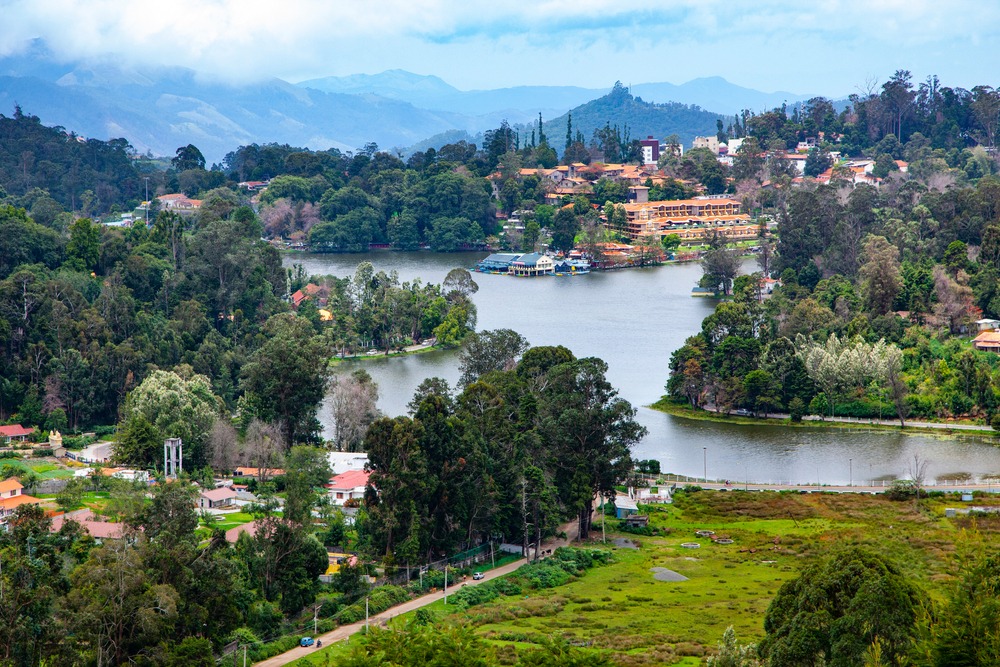
Palakkad
Palakkad
Palakkad, a crossroads city in Kerala, centers around its 18th-century granite fort, verdant rice paddies and the natural pass that opens the Western Ghats toward Tamil Nadu. An ideal base for exploring Silent Valley and the Thrissur region.
Palakkad holds a strategic position in Kerala, at the foot of the Western Ghats. The city owes its historical importance to the Palakkad Pass, the sole major natural gap in the mountain range separating Kerala from Tamil Nadu. This corridor has shaped trade routes, invasions and local culture for centuries. Today, Palakkad blends colonial fortification, lush rice fields and access to the forests of the Silent Valley region.
Practical information at a glance
- Access: Palakkad Junction is a major railway hub connecting Coimbatore, Kochi and Chennai.
- Nearest airport: Coimbatore International Airport (Tamil Nadu), approximately 55 km away.
- Recommended duration: 2 to 3 days to combine the city, fort and natural excursions.
- Dress code: Covered clothing recommended for temples and mosques in the old town.
- Language: Malayalam predominant; Tamil is widely understood.
What to see
The Palakkad Fort (Tipu Sultan Fort) is the central monument: a granite fortress built by Hyder Ali in the 18th century, well preserved and surrounded by moats. The Malampuzha Garden and Dam, a few kilometers to the north, offers a panoramic reservoir with landscaped gardens. The Kanjikode rice paddies and plantations on the outskirts illustrate the agricultural economy that earned Palakkad its reputation as the "granary of Kerala."
History and context
The Palakkad Pass—roughly 30 km wide—allowed the Maratha armies, then Hyder Ali and Tipu Sultan, to penetrate Kerala. The British seized the fort in 1790 and made it an administrative stronghold. This crossroads position explains the city's unique cultural blend: Tamil, Malayali influences and traces of colonial architecture coexist in the old quarters.
Highlights of your visit
Tipu Sultan Fort
Built around 1766, this laterite granite fort is among the best preserved in Kerala. The Archaeological Survey of India oversees its maintenance. Inside, a Hanuman temple and a mosque bear witness to the layering of eras. The ramparts offer clear views over the city.
Malampuzha Dam and gardens
This dam on the Bharathapuzha river supplies irrigation for the region's rice paddies. The landscaped gardens below, with outdoor sculptures and a local cable car, make it a popular relaxation spot for Kerala families.
Silent Valley National Park
About 80 km north of Palakkad, this national park protects one of the last primary tropical wet forests of the Ghats. It is home to lion-tailed macaques, elephants and exceptional plant biodiversity. Access is regulated; a permit is required.
Nemmara and weaver villages
The Nemmara region, about twenty kilometers away, is known for its cotton-weaving cooperatives. The Nemmara Vela, temple festivals with caparisoned elephants, attract thousands of visitors each year (typically April-May).
Etiquette and visiting rules
- Remove your shoes before entering temples and mosques.
- Clothing covering shoulders and knees is required in places of worship.
- At Silent Valley, strictly respect marked trails and entry hours set by the forestry department.
Photography tips
The fort is most photogenic early in the morning, before visitor crowds and in raking light that highlights the granite's texture. The rice paddies around Palakkad are particularly beautiful between July and September, during peak growing season. At Malampuzha, sunset over the reservoir offers interesting reflections.
Location and access
Palakkad sits in the district of the same name, in eastern Kerala, on the border with Tamil Nadu. The city is accessible by train from Kochi (about 3 hours), Coimbatore (less than 1 hour) and Chennai. Regular buses connect Palakkad to Thrissur, Coimbatore and Ooty. In town, auto-rickshaws and local taxis are the usual means of transport.
Around the area
- Thrissur — Cultural capital of Kerala, famous for the Thrissur Pooram, one of the country's largest elephant festivals.
- Silent Valley National Park — Protected primary forest, sanctuary of the lion-tailed macaque.
- Malampuzha — Dam and gardens, a relaxation spot just kilometers from the center.
- Coimbatore — Major industrial city in Tamil Nadu, gateway to the Nilgiris and Ooty.
Frequently asked questions
October to March offers pleasant weather, with moderate temperatures and little rain. Avoid June-August if you dislike the monsoon, though the rice paddies are lush then.
The fort entrance is managed by the Archaeological Survey of India. A modest admission fee is usually charged for foreign visitors; check current rates on-site or with your local agency.
You need to reach Mukkali, the park's entry point, about 80 km away. A permit issued by Kerala's forestry department is mandatory. Visits are typically made by jeep with an official guide.
Yes. Palakkad fits naturally into a circuit connecting Thrissur, Kochi and the Nilgiris (Ooty on the Tamil Nadu side). The railway connection makes travel without a car easy.
The Nemmara Vela, temple festivals with elephant processions, typically take place in April-May in nearby villages. Check with your agency for the exact dates of the current year.
Photography is generally allowed within the fort grounds. Inside the Hanuman temple, ask permission before using your camera.
Photos
Want to discover this destination?
Our local advisors design your tailor-made trip.