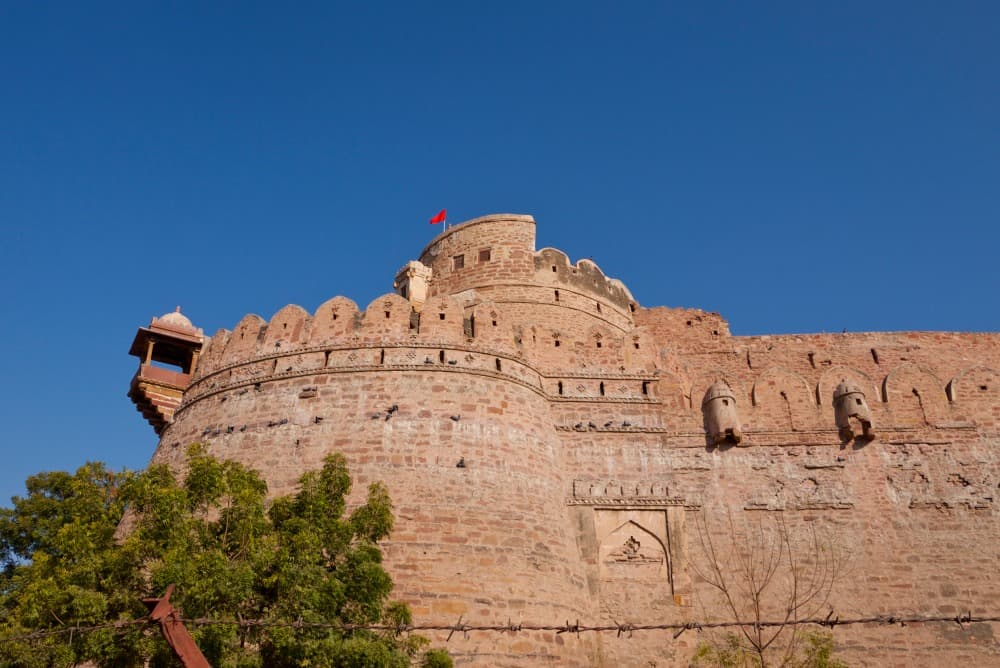
Nagaur Fort (Ahhichatragarh)
Nagaur Fort (Ahhichatragarh)
In the heart of Marwar, Ahhichatragarh Fort at Nagaur brings together ornate palaces adorned with frescoes, Mughal gardens, and medieval ramparts in one of western Rajasthan's finest restored sites.
At the heart of Nagaur city in western Rajasthan, Ahhichatragarh Fort commands the arid plains of Marwar. Built on a site occupied since antiquity, it stands as one of Rajasthan's most meticulously restored fortified complexes, often overlooked by conventional circuits. Its adorned palaces, water gardens, and mural frescoes offer rare testimony to the blending of Mughal and Rajput architecture.
Essential Information at a Glance
- Admission: Paid entry (differentiated rates for Indian residents and foreign visitors)
- Suggested duration: 2 to 3 hours to explore the entire site
- Dress code: No strict requirement, but modest dress is recommended
- Access: Nagaur is connected by road to Jodhpur (approximately 135 km) and Bikaner (approximately 135 km); buses and taxis serve the town
What to See
Within its ramparts, the fort encloses several distinct palaces: the Hadi Rani Mahal, the Shahi Mahal, and Amar Singh Palace, each bearing frescoes with pigments still vibrant. The interior gardens, designed after the Mughal charbagh model, are fed by a system of channels and basins still partially functional. The ramparts offer expansive views of the town and surrounding desert.
History and Context
The site is mentioned as early as the 4th century as a fortress of the Nagas. The Chahamanas (Chauhans) fortified it in the 12th century. The Mughals seized it in the 16th century: Akbar stayed here, and his son Salim (the future Jahangir) was placed under house arrest. The Rathores of Jodhpur took control in the 18th century and added the most ornate palaces. A major restoration effort, undertaken in partnership with the Getty Conservation Institute and the Rajasthan government in the 2000s, saved the frescoes from deterioration.
Highlights of Your Visit
Palace Frescoes
The interior walls of Amar Singh Palace preserve paintings depicting court scenes, elephants, and floral motifs. The pigments—ochre, indigo, lime white—were stabilized during restoration. This is one of the rare examples of Rajput mural painting accessible to the public in such legible condition.
The Hydraulic System
The interior gardens incorporate channels, fountains, and basins that speak to sophisticated water engineering. This network, inspired by Mughal design, maintained coolness in the royal apartments in the heart of the desert.
Ramparts and Towers
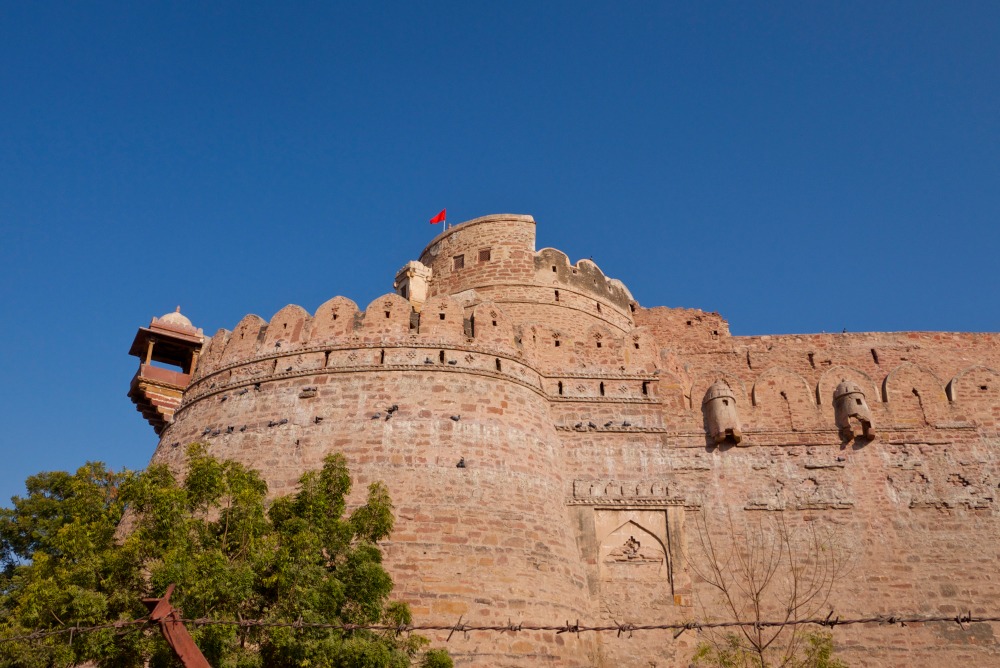
The rampart walk offers perspectives over Nagaur city and its blue roofs, as well as the flat expanse of Marwar. The massive corner bastions illustrate the evolution of defensive techniques between the Rajput era and adaptation to Mughal cannon warfare.
Photography Tips
Morning light enters through east-facing courtyards and illuminates the frescoes directly without glare. Gardens and basins photograph best in late morning, when the sun is still low. The northern ramparts frame the city with the mosque minaret in the background. Photographing the frescoes is permitted, but avoid flash, which damages the pigments.
Location and Access
The fort stands at the heart of Nagaur, a town in the district of the same name in western Rajasthan. Nagaur is accessible from Jodhpur via NH62 (approximately 135 km, 2.5 hours by car) and from Bikaner (similar distance). Nagaur railway station is served by a few trains from Jodhpur. Local guides offer guided tours at the fort entrance.
Nearby Attractions
- Mehrangarh Fort, Jodhpur — Marwar's most imposing fortress, approximately 135 km to the southwest.
- Junagarh Fort, Bikaner — richly decorated fortified palace, at comparable distance to the northeast.
- Karni Mata Temple, Deshnok — temple famous for its sacred rats, on the road to Bikaner.
Frequently asked questions
The period from October to March is most pleasant: temperatures remain moderate. Summer (April-June) is extremely hot in this desert region. In January, the Nagaur Fair takes place, one of Rajasthan's largest livestock fairs, bringing animation to the entire town.
Plan for 2 to 3 hours to explore the palaces, gardens, and ramparts at a leisurely pace. If you're interested in the frescoes in detail or take a guide, allow a half-day instead.
Yes. Nagaur sits midway between Jodhpur and Bikaner. It integrates naturally into a Rajasthan circuit as a day's stop between these two cities, without requiring a significant detour.
Photography is generally allowed in courtyards and on ramparts. For the frescoes, avoid flash to prevent damage to the restored pigments. Check for any restrictions at the entrance when you visit.
Local guides offer their services at the fort entrance. A guide is helpful for understanding the history of the various palaces and the iconography of the frescoes, which receive little explanation from signage.
Photos
Nearby
Interested in this visit?
We can include it in your personalised itinerary.