Pushkar Camel Fair (Pushkar Mela)
Pushkar Camel Fair (Pushkar Mela)
Every November, Pushkar hosts the Pushkar Mela: a camel fair, Hindu pilgrimage, and popular festival combined on the shores of a sacred lake in the heart of Rajasthan.
Every November, Pushkar transforms into one of Asia's most spectacular gatherings. The Pushkar Mela — a camel fair and Hindu pilgrimage — draws hundreds of thousands of visitors, herders, merchants, and devotees to the shores of a sacred lake. Commerce, spirituality, and festivities blend together for five to ten days in an atmosphere unique to Rajasthan.
Practical information at a glance
- Season: Kartik month in the Hindu calendar, usually late October to mid-November (dates vary annually according to the lunar calendar).
- Access: Pushkar is approximately 11 km from Ajmer, connected by road. The nearest railway station is Ajmer Junction, with regular buses and taxis to Pushkar.
- Recommended duration: 2 to 3 days to enjoy the markets, competitions, and ghats at sunrise.
- Dress code: modest attire recommended, especially around the lake and temples.
- Accommodation: book well in advance — hotels and tent camps fill up months before the event.
What to see
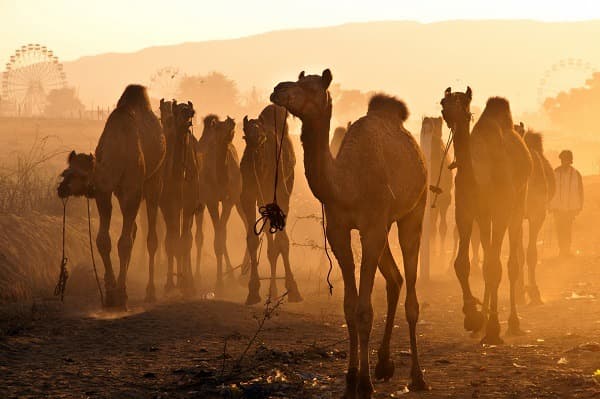
The heart of the fair is the mela ground, a vast expanse of sand where thousands of camels, horses, and cattle converge. Herders from Rajasthan, Gujarat, and Haryana negotiate, adorn their animals with colorful necklaces, and participate in beauty contests. Around it, a labyrinth of stalls sells textiles, jewelry, spices, and local handicrafts.
In the evening, folk music performances, acrobatics, and dance shows animate the site. On the spiritual side, the ghats of Pushkar Lake host ritual baths and aarti ceremonies at sunset, particularly intense during the full moon of Kartik Purnima.
History and context
The Pushkar Mela has existed for centuries. Originally a commercial market for nomadic herders of the Thar Desert, it gradually overlapped with the Hindu pilgrimage around Pushkar Lake — one of the few sacred lakes dedicated to Brahma in India. Today, the fair brings together two inseparable dimensions: economic and religious.
Highlights of your visit
The camel ground at dawn
Arriving at the mela ground before sunrise reveals the fair in its most authentic dimension. Herders prepare their animals, rasant light colors the dust with pink and gold. It's the most photographed hour and the least crowded with tourists.
Kartik Purnima — the full moon
The fair's final day coincides with the full moon of Kartik. Thousands of pilgrims bathe in the sacred lake before dawn. The atmosphere is both reverent and electric — a high point of the Hindu religious calendar.
Competitions and traditional games
Camel races, longest mustache contests, equestrian games: the official program varies each year but these events remain popular gatherings that bring together locals and visitors.
Artisan markets
The rows of stalls offer a panorama of Rajasthani craftsmanship: embroidered mirrors, silver rings, dyed turbans, pottery. Prices are negotiable and quality highly variable — take time to compare.
Etiquette and visiting rules
- Pushkar Lake is sacred: no tourist bathing, alcohol and meat prohibited throughout the town.
- At the ghats, always ask permission before photographing pilgrims in prayer.
- Priests offer paid blessings at the ghats — you may politely decline.
- Clothing covering shoulders and knees required near temples and the lake.
Photography tips
The golden hour at dawn on the camel ground is the ideal window: warm light, intense activity, fewer crowds. A telephoto lens allows you to capture details of the animals' adornments without disturbing the herders. At the ghats, the sunset aarti ceremony offers reflections on the lake — a tripod is recommended. Avoid flash during religious ceremonies.
Location and access
Pushkar is located in Ajmer district, in the heart of Rajasthan. The town is accessible from Ajmer (approximately 11 km) by local bus or taxi. Ajmer is well served by train from Jaipur, Jodhpur, and Delhi. During the fair, additional shuttles are organized from Ajmer. Access by private vehicle may be limited as you approach the site during peak days.
Nearby places to visit: Brahma Temple of Pushkar, Sacred Lake of Pushkar, Dargah Sharif of Ajmer.
Nearby
- Brahma Temple of Pushkar — one of the very rare temples dedicated to Brahma in India, a few minutes' walk from the ghats.
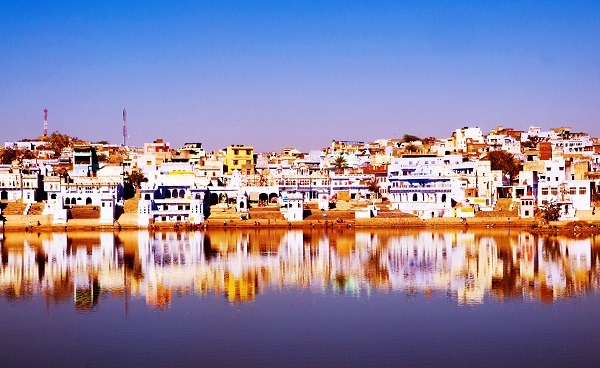
- Sacred Lake of Pushkar — surrounded by 52 ghats, the spiritual heart of the town year-round.
- Dargah Sharif of Ajmer — a major Sufi shrine in Ajmer, a natural stop before or after Pushkar.
- Taragarh Fort — a medieval fortress overlooking Ajmer, accessible by jeep or on foot.
Photos
Interested in this visit?
We can include it in your personalised itinerary.