Aurangabad
Aurangabad
Gateway to the Ajanta and Ellora caves, Aurangabad concentrates 2,000 years of Indian history between Mughal forts, mausoleums, and Hyderabadi cuisine.
Aurangabad stands at the crossroads of many historical sites, earning its status as the tourism capital of Maharashtra. Beyond its architectural heritage and cultural diversity, this city is emerging as one of the most important commercial and industrial hubs on the subcontinent. Positioned on the ancient Silk Road and blessed with a rich history tied to Aurangzeb, Aurangabad deserves a place in your next trip to India.
History
The origins of Aurangabad trace back to the 2nd century BCE. During this period, the Satavahanas ruled central India, including Aurangabad. The Ajanta caves are believed to have been created in this era. The sculptures visible in these caverns tell the story of daily life among locals during this period. The Ajanta caves fell into obscurity for a long time, until the 19th century, when British soldiers stumbled upon them by chance during a hunting expedition.
Approximately 30 kilometers from Aurangabad, the monolithic structures and caves of Ellora allow visitors to trace the history of Buddhism, Hinduism, and Jainism in the region between the 5th and 10th centuries.
From the Satavahanas to the Marathas, passing through the Yadavas and the Mughals, each dynasty that ruled Aurangabad left its imprint on the city. The mighty fort of Devagiri Daulatabad provided the city with a strategic stronghold. At one point, the Sultan Muhammad ibn Tughluq attempted to seize Aurangabad, but without great success. Ultimately, it was the rule of Aurangzeb, son of Mughal Shah Jahan, that left an indelible mark on the city's history. He, known as the last of the Great Mughals, is responsible for the city's name, Aurangabad, meaning "built by royalty."
Today
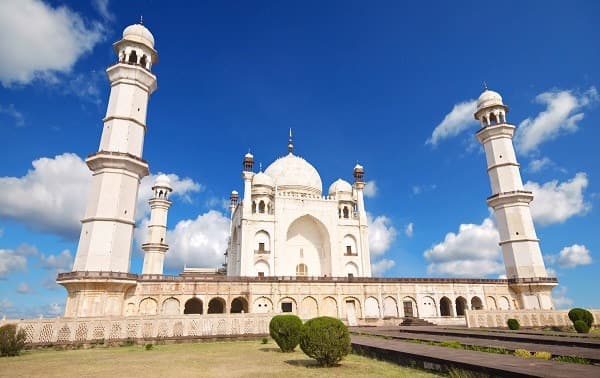
Aurangabad stands as the tourism capital of Maharashtra. The city maintains close ties with important historical sites such as the Ajanta and Ellora caves, which are part of the UNESCO World Heritage. In summary, the Ellora caves date from the Rashtrakuta dynasty, approximately 1,500 years ago, and represent an authentic example of Indian architecture carved from stone. The 34 caves that form the site were excavated in the Charanandri hills, 31 kilometers from Aurangabad. They house various Buddhist, Hindu, and Jain relics that speak volumes about the connection between religion and social order at that time. Another monument to discover during your visit to Aurangabad is the Bibi-ka-Maqbara mausoleum, which is defined as a replica of the Taj Mahal. Created through the efforts of Prince Azim Shah, it pays warm tribute to Queen Rabia-ul-Durani, wife of Aurangzeb.
In Maharashtra, Aurangabad showcases strong economic growth. It is emerging as a leading industrial center. The city benefits from air and rail connections with Mumbai, while enjoying an excellent road network linking it to major destinations across the state. Beyond the Ellora and Ajanta caves, Aurangabad serves as a stopover for tourists heading to Shirdi, Daulatabad, Paithan, and Pitalkhora.
Gastronomy in Aurangabad is traditionally influenced by Hyderabadi and Mughlai cuisines. Food enthusiasts can thus appreciate the finest examples of these styles in their varied and authentic forms in the city's restaurants. Among others, taste Pulao, Biryani, and Naan. The latter is a type of bread prepared in a traditional oven called a "tandoor." Of course, in a city that holds a major place in India's tourism sector, the hotel offering is diverse. From guesthouses to luxury suites, passing through mid-range hotels, packages adapt to all preferences and budgets.
Climate
The summer season in Aurangabad begins around March and extends through May. During this period, temperatures in the city range from 27°C to 31°C, climatic conditions that are rather favorable for tourism. The monsoon records temperatures not exceeding 35°C. Rains typically arrive in July and last until September. Plan accordingly with suitable clothing if you intend to visit Aurangabad during this period. The winter season spans November to February and is marked by cool temperatures, often dropping to 10°C.
Aurangabad Airport connects the city with all major destinations across India. Services include flights to and from Delhi, Mumbai, Hyderabad, Udaipur, Jaipur, Nagpur, and Pune. From the airport, taxis and bus lines are easily accessible to reach various points of interest in the city or your hotel. On the rail front, railway lines also connect Aurangabad to Delhi, Mumbai, and Hyderabad, as well as to Madurai, Chennai, Amritsar, and Bhopal.
Regarding road transport, Aurangabad has two bus stations: the CIDCO bus terminal and the central bus station. Public and private transport services operate daily on the road network connecting Aurangabad to major Indian cities.
In Aurangabad, you can move around on foot, by taxi, by bus, or by rental vehicle.
What to Do in Aurangabad?
- Pay homage to Queen Rabia-ul-Durani at the Bibi-ka-Maqbara mausoleum
- Visit the Ajanta and Ellora caves
- Discover traditional Mughlai and Hyderabadi cuisine
- Purchase silk saris, and more
Accommodation in Aurangabad
Want to discover this destination?
Our local advisors design your tailor-made trip.