Take a Shikara Ride
Take a Shikara Ride
Gliding across the calm waters of Dal Lake or Nigeen Lake aboard a shikara is to experience a timeless moment suspended in the majestic landscapes of Kashmir. This iconic vessel
Gliding across the calm waters of Dal Lake or Nigeen Lake aboard a shikara is to experience a timeless moment suspended in the majestic landscapes of Kashmir. This iconic vessel of this region of Inde allows you to discover local life from the water, between snow-capped mountains, Mughal gardens and floating houses. More than a simple ride, the shikara embodies the art of Kashmiri living.
What is a shikara?
The shikara is a small wooden boat typical of Srinagar's lakes, notably Dal Lake, in Jammu and Kashmir. Designed to navigate with grace through the shallow waters of lakes and canals, it features fine hulls and pointed ends.
Shikaras are built from deodar cedar wood, which naturally resists aquatic decomposition. Their length typically ranges from 7.5 to 12 metres, with a flat bottom and characteristic "spade" shape. The gunwale, made of refined planks, rises approximately 45 cm.
A shikara can accommodate around six people, with the boatman positioned at the stern and maneuvering using a single oar. Traditionally, it served to transport goods, harvests, or as a link between water-bordered quarters. Today, while a few shikaras are still used for fishing, harvesting aquatic vegetation, or as a means of transport, the majority are dedicated to tourism.
For tourist outings, the hull is often fitted with a vaulted roof supported by four pillars, and the interior furnished with cushions, comfortable seats and sometimes covers, supported by integrated chests. Decorative curtains, wooden sculptures and vibrant colours often adorn the vessel.
The shikara is an iconic boat of the Kashmir valley. However, due to its tourist popularity, it is also found in certain regions of Inde. Moreover, in Kerala, in South Inde, this term is also used to designate other traditional vessels, very different in their form and function from those of Kashmir. These navigate the backwaters, a vast network of canals bordered by rice fields and palm trees that have made Alleppey (Alappuzha) and its surroundings famous. We also discuss them in this article.
Cultural significance of the Kashmiri shikara
In Kashmir, the shikara embodies far more than a simple means of transport: it is a powerful cultural symbol of the region, comparable to the Venetian gondola. Present in Indian art, music, painting and cinema, particularly through Bollywood films, this vessel evokes in the collective imagination beauty, peace and an ancestral way of life on the water.
Each summer, the Shikara Festival enlivens Dal Lake. It honours this living heritage and the craftsmanship of local artisans. The highlight of the event is a parade of decorated shikaras, adorned with flowers, embroidered fabrics and traditional patterns, often inspired by historical or cinematic themes. Some vessels require several weeks of preparation. Speed races showcase the technique and strength of the oarsmen, while musical performances, folk dances, handicraft and local gastronomy stalls complete the event.
Shikara ride in Srinagar
Taking a shikara ride in Srinagar, on the peaceful waters of Dal Lake or Nigeen Lake, is an experience not to be missed during your trip to Kashmir. The boat, long and slender, glides silently across the water's expanse, guided by one or two boatmen dressed in traditional phirans, sometimes carrying a kangri, a portable brazier typical of Kashmir. The setting is striking: mountains as a backdrop, water lilies, floating houses, Mughal gardens such as Nishat or Shalimar, and sanctuaries accessible directly by boat, such as Hazratbal.
At dawn, the floating market comes alive. Flower, fruit or saffron vendors exchange their wares from boat to boat, in a serene and colourful choreography.
Onboard, everything is designed for comfort. In addition to padded seats and backrests, a warm blanket is also provided to tourists during cool morning rides. Steaming tea can also be served to you during the crossing.
On the shores, you can spot white-throated kingfishers, perched on willows, watching for prey above the floating gardens.
More than a simple journey, a shikara ride offers a suspended moment, a gentle and poetic immersion into the soul of Kashmir.
Which itinerary to choose?
There are several shikara routes in Srinagar, suited to your preferences and the length of your stay. Here are the most popular ones:
- Classic loop on Dal Lake (1 to 2 hours): ideal for a first discovery. You will glide between the floating vegetable gardens, the water lilies, and enjoy superb views of the Zabarwan hills. The atmosphere is peaceful and very photogenic.
- Excursion on Nigeen Lake (2 to 3 hours): calmer and less touristy than Dal, this route takes you among the blooming lotus and offers a glimpse of the elegant Nigeen houseboats. It's a more intimate ride, perfect for relaxing.
- Romantic sunset cruise (approximately 1.5 hours): for its magical atmosphere, with golden light on the water.
- Heritage route via Khushal Sar Lake (half-day): for a deeper immersion, this crossing introduces you to historic canals, traditional floating markets and scenes of local life. In winter, this circuit takes on a peaceful and melancholic character that is particularly striking.
Each itinerary has its charm, and some boatmen are happy to recount historical or romantic anecdotes linked to the secret corners of the lakes.
In Srinagar, you will find a multitude of shikarawalas (boatmen) offering their services, directly on the shores of Dal Lake or near houseboats. Here are some criteria for making a good choice:
- Price clarity: prices vary according to duration and itinerary. Always negotiate in advance to avoid any surprises.
- Reputation: favour operators recommended by your accommodation or by online review platforms.
- Language: some oarsmen speak English, which can enrich the visit.
- Boat comfort: check the general condition of the shikara, the cleanliness of the cushions, stability.
- Safety: opt for a shikarawalas offering life jackets.
When to take a shikara ride in Kashmir?
The best time to take a shikara ride in Kashmir is between May and October. During this season, the climate is mild, the mountains lush, and the lake waters calm and accessible.
- Summer (June to August): perfect for enjoying pleasant temperatures (20 to 30°C) and long days.
- Autumn (September to early November): the golden colours of the trees and the low-angle light create a magical atmosphere.
- Winter (December to February): Dal Lake can partially freeze. Some rides are possible but limited and require proper equipment against the cold.
The best time of day for a ride is early morning (for calm and floating markets) or late afternoon (for light).
Shikhara boat ride in Alleppey
In Kerala, the shikara is less a cultural object than a practical way to explore rural life. However, the experience is also worth the detour. It offers a dive into a calm and verdant world, rhythmed by tides and village traditions.
Characteristics of the Kerala shikara
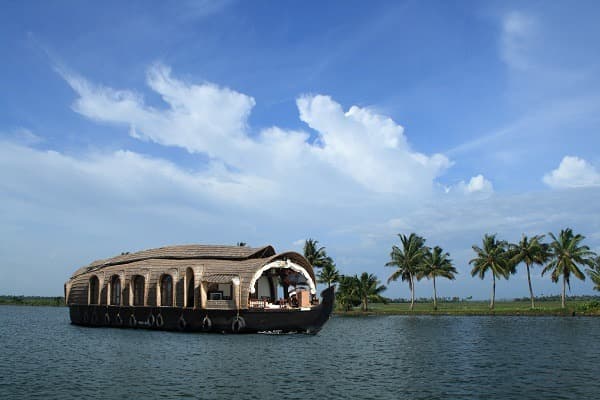
Unlike the Kashmir shikara, which is more decorative and artisanal, the Kerala shikara is simple, often motorised and designed to be functional. It can accommodate between 2 and 10 people, depending on its size.
Its typical features include:
- Roof made of palm or coconut fronds, protecting from the tropical sun.
- Wooden or plastic seats, sometimes covered with cushions.
- Sober design, without ornaments or artistic paintings.
- Engine at the rear for longer rides, or oar for ecological circuits.
What to expect during a shikara ride in Kerala?
A shikara ride through the Kerala backwaters is a contemplative experience quite different from that of Kashmir. Here, no mountains or floating markets. Instead, you enter a world of canals lined with coconut trees, flooded rice fields, small temples and colourful houses built on the water's edge.
The pace is slow. You observe:
- Women washing their clothes on stone steps.
- Fishermen pulling their nets at daybreak.
- Children waving to passers-by from the shore.
- Waterfowl flying over the canals.
The silence, the humid warmth, the smells of earth, curry or flowers form a strong sensory atmosphere, almost meditative.
Best time to take a shikara ride in the backwaters
Kerala's tropical climate makes shikara rides pleasant between November and March, during the dry season. Temperatures are mild (25 to 30°C) and rainfall infrequent.
The best times of day are also early morning (freshness, golden light) and late afternoon (sunset over the rice fields).
Houseboats, an experience not to be forgotten
Beyond the shikara, another experience awaits you in Kashmir: a night aboard a houseboat. Inherited from the British colonial era, these sculpted wooden floating houses are moored on Dal or Nigeen Lakes, and offer a peaceful setting, with views of the mountains and calm waters. This type of vessel also exists in Kerala, where houseboats navigate through the backwaters. But in Srinagar, they remain stationary, forming veritable floating quarters where you discover the unique charm of life on the water.
Give it a go!
Our local experts arrange this activity for you.